


The Northern-Arctic territories of the Far East: current spatial and economic transformations and the emergent effect in strategic development

https://doi.org/10.25587/2587-8778-2026-3-5-19
Abstract
The problem explored in this article relates to the naturally occurring processes of significant transformations in the development of a spatial and economic enclave emerging in the territories of the Far Eastern outpost of the Arctic Zone of the Russian Federation (AZRF) and the Far North, which historically share a close infrastructural and integrated unity. These territories include the Arctic and central regions of the Sakha Republic (Yakutia) and districts of Chukotka Autonomous Okrug and Magadan Oblast. The purpose of this study was to identify additional evidence of the formation of the so-called Northeastern mesoregion in this zone, which is the high-latitude component of the Far Eastern Federal District (macroregion). The geostrategic role of these territories as transboundary areas in the global Arctic basin is particularly emphasized and considered, as they border our country in the near abroad in its Pacific sector with the state of Alaska, USA, and in the far abroad with the northern Arctic territories in western Canada. The research’s methodological and methodological tools were based on theories of spatial economics, infrastructure, cluster analysis, mesocluster approach, methods for studying inversion processes, and the integration synchronization of formal and informal institutions. As a result of the author’s previous cycle of research, as well as the final study of this cycle, characterized in this article, the main sources for obtaining additional emergent effects of the deeply integrated spatial-economic formations being formed here are identified across the entire range of its socio-economic parameters. In the future, it is necessary to intensify research in this area, as well as to focus the attention of specialists on the issues of adjusting the institutional mechanisms of state-planned regulation of the development of the studied economic entities, which at this strategic stage acts as a priority over market methods.
Keywords
Arctic Zone of the Russian Federation,
North Arctic territories,
Far Eastern outpost,
Far Eastern and Pacific Arctic,
infrastructure,
inversion processes,
mesocluster approach,
institutional transformations,
Northeastern mesoregion
Supporting agencies: The research was conducted as part of the implementation of research programs in recent years, which were implemented at the Institute of Economic Research of the Far Eastern Branch of the Russian Academy of Sciences.
About the Author
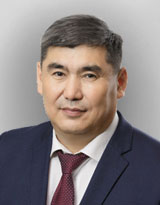
B. Kh. Krasnopolsky
Economic Research Institute, Far Eastern Branch of the Russian Academy of Sciences
Russian Federation
Russian Federation
Krasnopolsky Boris Khananovich ‒ Dr. Sci. (Economics), Professor, Chief Researcher
Khabarovsk
References
1. Slavin S.V. The Northeast of the USSR as a New Emerging Economic Region and Complex Interregional Problems. Moscow, 1958:30 (in Russian).
2. North-Eastern economic region of the RSFSR: (Nature and economy): recommendation index. Pushkin Yakut Republic’s Library, Reference and Bibliographic Department; compilers: E.G. Maksimova, S.E. Mostakhov. Yakutsk: Yakutknigoizdat; 1964:20 (in Russian).
3. North-Eastern economic region of the Russian Federation: (justification selection). AN RS(Ya). Institute of Regional Economics, Yakutsk: Kuduk; 1998:84 (in Russian)
4. Vashchuk A.S., Kovalenko S.G. North-East of Russia in the 1990s: deindustrialization on the periphery of the country. Russia and the Asia-Pacific region. 2022;(4):27–50 (in Russian).
5. Nikiforov V.V., Kovrov G.S. On the formation of the North-Eastern interregional gold mining cluster. National Interests: Priorities and Security. 2016; (11):15–26 (in Russian).
6. Galtseva N.V., Favstritskaya O.S., Sharypova O.A. Identifying the causes of population outflow from the successful Far Eastern Arctic Region (1990–2020). Economy of the Region. 2024;(20)2:539–555 (in Russian). https://doi.org/10.17059/ekon.reg.2024-2-13.
7. Volynsky, A. I. The Meso-Level in Economic Research: Necessity or Future Victim of Occam’s Razor? Actual Problems of Economics and Law. 2020;(14)4: 667–682 (in Russian). http://dx.doi.org/10.21202/1993-047X.14.2020.4.667-682.
8. Mesoeconomics: State and Prospects: Monograph. Еd. V.I. Mayevsky, S.G. Kirdinoy-Chandler, M.A. Deryabina. Moscow: Institute of Economics RAS; 2018:314.
9. Taranukha Yu.V. Will Mesoeconomics become a new direction in economic theory? Bulletin of St. Petersburg University. Economics. 2022;38(2):259–284 (in Russian).
10. Putin gave three months to prepare development plans for Far Eastern cities. September 5, 2023 (TASS). Available at: https://tass.ru/ekonomika/18662687 (accessed: 7 May 2026) (in Russian).
11. Prisyazhniy M.Yu. Economic zoning as an instrument of territorial organization management of Yakutia. Vestnik of NEFU. 2011;8(1):157–163 (in Russian).
12. It was proposed to divide the Far East into four macroregions. November 24, 2022.Vesty, RU. Available at: https://www.vesti.ru/article/2644055L (accessed: 7 May 2026) (in Russian).
13. Krasnopolsky B.Kh. Infrastructure and spatial economics: theoretical and applied research. Ed. P.A. Minakir. Khabarovsk: IEI FEB RAS; 2023:234.
14. Sevostyanov, D.A. Organization life cycle and the inversive relationship. Social and Psychological Problems of Modern Society. 2017;(6)2:53–59 (in Russian).
15. Steblyak V.V., Lotkin I.V. Linear and inversion models of global sociocultural Dynamics. Culture and Civilization. 2020;(10)2A:138–146 (in Russian).
16. Krasnopolsky B.Kh. Inversion processes in the spatial economy and their manifestations in the development of transboundary northern Arctic territories of the Far East. Spatial Economy. 2024;(20)3:154– 179 (in Russian). https://dx.doi.org/10.14530/se.2024.3.154-179
17. Krasnopolsky B.Kh. North-Arctic territories of the Russian Far East: mechanisms of organizational and managerial coordination of mineral resource specialization industries of the microregion. Regionalistics. 2024;(11)4:24–42 (in Russian). http://dx.doi.org/10.14530/reg.2024.4.24
18. Bobrysheva, A.A., On the definition of a cluster as an integrated structure in the production sphere of activity. Economic Science of Contemporary Russia. 2023;(2):58–71 (in Russian). http://dx.doi.org/10.33293/1609-1442-2023-2(101)-58-71.
19. Klepach A. The Eastern challenge of spatial development. April 5, 2024. RSMD. Available at: https://russiancouncil.ru/analytics-and-comments/comments/vostochnyy-vyzov-prostranstvennogo-razvitiya/ (accessed: 7 May 2026) (in Russian).
20. Krasnopolsky B.Kh. North Arctic Territories of the Russian Far East: Mechanisms of organizational and managerial coordination of mineral resource sectors of the macroregion. Regionalistica. 2024;(11)4:24– 42 (in Russian). http://dx.doi.org/10.14530/reg.2024.4.24.
21. Douarin E., Schnyder G. Introduction to the symposium on “crisis and persistence: dynamics of institutional changes at the interface between formal and informal institutions. Published online by Cambridge University Press: 05 March 2025. Journal of Institutional Economics, . Available at: https://doi.org/10.1017/S1744137424000328.
22. The Palgrave Handbook of Arctic Policy and Politics. Eds. Carin Holroyd, Ken Coates. Publisher: Palgrave Macmillan Cham, Switzerland, 2025; 624. Available at: https://doi.org/10.1007/978-3-032-03031-3 (CHAPTER 13. Russia’s Arctic Regions and Policies, Gail Fondahl, Aileen A. Espiritu, and Aytalina Ivanova; 195-217).
Review
For citations:
Krasnopolsky B.Kh. The Northern-Arctic territories of the Far East: current spatial and economic transformations and the emergent effect in strategic development. Economy and nature management in the North. 2026;(3):5-19. (In Russ.) https://doi.org/10.25587/2587-8778-2026-3-5-19
Views:
19
JATS XML



 Email this article